INTRODUCTION
The growth observed especially over the last decade in the field of Road Ecology reflects the scale of the biological, social and economic impacts encompassed by this subject. Scientific investigations have produced striking figures: FORMAN & ALEXANDER (1998) estimated that approximately one million vertebrates are killed on roads every day in the United States, making road mortality the leading direct cause of vertebrate mortality associated with human activities. Annual bird mortality on U.S. roads was estimated at 80 million (ERICKSON et al. 2005), and European estimates are similarly alarming: four million in the United Kingdom, two million in the Netherlands, 3.7 million in Denmark and 8.5 million in Sweden (SEILER 2001). Wildlife roadkill surveys conducted as part of environmental studies for road licensing in Brazil, as well as the still limited academic literature on the subject, indicate a similar situation in the country.
The barrier effect, with the resulting habitat fragmentation and its adverse consequences for biodiversity at multiple levels, is another major, widespread and complex effect of linear infrastructure (KELLER et al. 2005; SEILER 2001).
The environmental licensing process provides an excellent opportunity both for discussing ideas, concepts and proposals and for generating knowledge, particularly when its technical component is conducted according to scientifically valid criteria.
This requires strategies capable of answering the questions that are essential to decision-making; the adoption of replicable protocols; and the organization of data so that they can be integrated with information from other projects, allowing knowledge to be generated at a broader level. Finally, the process must be capable of evaluating the results obtained and continuously seeking improved approaches, without disregarding existing knowledge but building upon it. These principles are inherent to adaptive management, proposed by SALAFSKY et al. (2001) as an appropriate way to maximize results in biodiversity conservation and natural-resource management.
Once this knowledge has been organized, action strategies can be defined to achieve the objectives—in this case, reconciling road infrastructure with environmental conservation, both of which are matters of public interest. Once such strategies have been defined, they must be disseminated and understood by those involved in decision-making, formally including planners, technical professionals and managers, while also involving society at large, policymakers and scientists.
Government agencies in several countries have developed procedural guidance for assessing road impacts and defining measures for their mitigation and subsequent monitoring of effectiveness.
With a similar purpose, this procedural guide (CONECTE) was developed from a monograph presented in the Specialization Course in Faunal Diversity and Conservation, Department of Zoology, UFRGS (LAUXEN 2012), and is intended for use within the Brazilian environmental licensing process. Its purpose is to synthesize current knowledge on known impacts and on mitigation measures addressing impacts that directly affect wildlife. It also seeks to characterize the stages of environmental licensing and the information required for decision-making at each stage, and proposes requirements and methods for baseline assessment, selection of alternatives and monitoring of effectiveness.
The Guide presents the relevant issues at each stage of the process together with known and accepted alternatives for addressing them, leaving the selection of the most appropriate alternative to those involved, according to the specific characteristics of each project and its environmental setting. The decision tree proposed by the Guide (Figure 1) is restricted to the basic questions of the process, because the multiplicity of factors involved would make any attempt to identify an ideal solution from hypothetical data excessively complex and probably unreliable. With an adequate baseline assessment and an appropriate theoretical basis regarding mitigation measures and their indications, technical teams should have the information needed to select the alternatives best suited to the project under analysis. Above all, it must be recognized that in a relatively new field of knowledge, scientific certainty and robust evidence remain limited. There is broad agreement, however, that the combination of biotic and physical factors is unique to each project. A sequence of procedures and standards can—and should—be established for obtaining reliable baseline data, and technical teams should have access to an up-to-date knowledge base. At present, however, it would be overly ambitious to establish a definitive formula capable of identifying a single solution applicable to every situation.
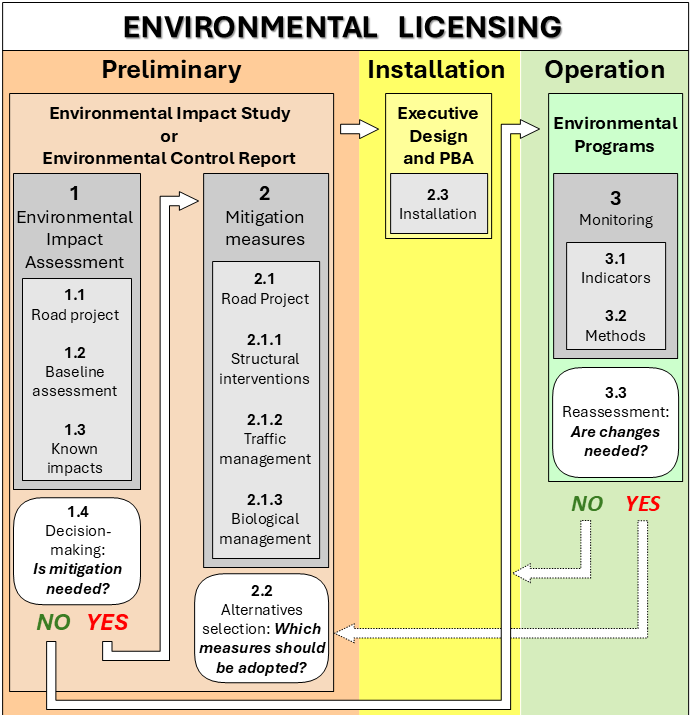 Figure 1. Flowchart of the procedural guide for mitigating impacts on wildlife.
Of the four main modules that make up the Guide, two were structured with less complexity and depth (Environmental Impact Assessment and Monitoring), because they were outside the scope of the original monograph, while two were developed in full—although not as definitive products, given the nature of both the tool and the subject matter (Environmental Licensing and Mitigation Measures). A fifth module, Geographic Information, was originally incorporated only to illustrate its potential and required further development; it emphasized the need to use geographic information tools and their possibilities. Future improvements envisaged mechanisms for searching the bibliography by keywords in titles, authors, abstracts and document contents, a module of Brazilian case studies, and links to research groups, researchers, consultants and other interested parties.
The authors encourage the participation and involvement of everyone interested in the development of this project, through comments, criticism and suggestions aimed at consolidating it as an increasingly useful tool for generating, analysing and disseminating information on the subject.
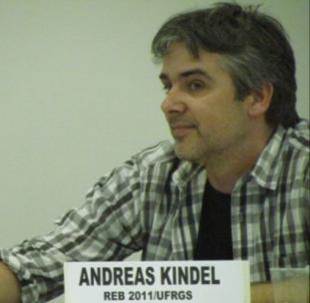 | Andreas Kindel: Holds a degree in Biological Sciences from the Federal University of Rio Grande do Sul (1991), a Master's degree in Ecology from the same university (1996), and a PhD in Botany from the Federal University of Rio Grande do Sul (2002). He is currently an associate professor at UFRGS and has served on the advisory council of Itapeva State Park (Rio Grande do Sul) and with the NGO Curicaca. His main area of interest is Conservation Biology, with emphasis on protected areas, road impacts, and the ecology and conservation of the coastal plain of Rio Grande do Sul. (Lattes CV) |
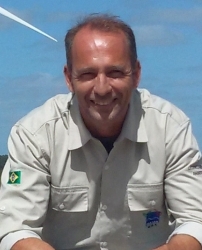 | Mozart da Silva Lauxen: Graduated in Biological Sciences from the Federal University of Rio Grande do Sul in 1992. From 1991 to 2003 he worked as a technician in the university's Department of Genetics. Since 2003 he has been an Environmental Analyst at the Brazilian Institute of the Environment and Renewable Natural Resources (IBAMA), and served as coordinator of the Environmental Licensing Unit in Rio Grande do Sul from 2008 to 2014. His main areas of interest are the assessment and mitigation of environmental impacts from roads and wind farms. (Lattes CV) |
Translation note: This English version was preliminarily translated using ChatGPT and has not yet undergone human review.